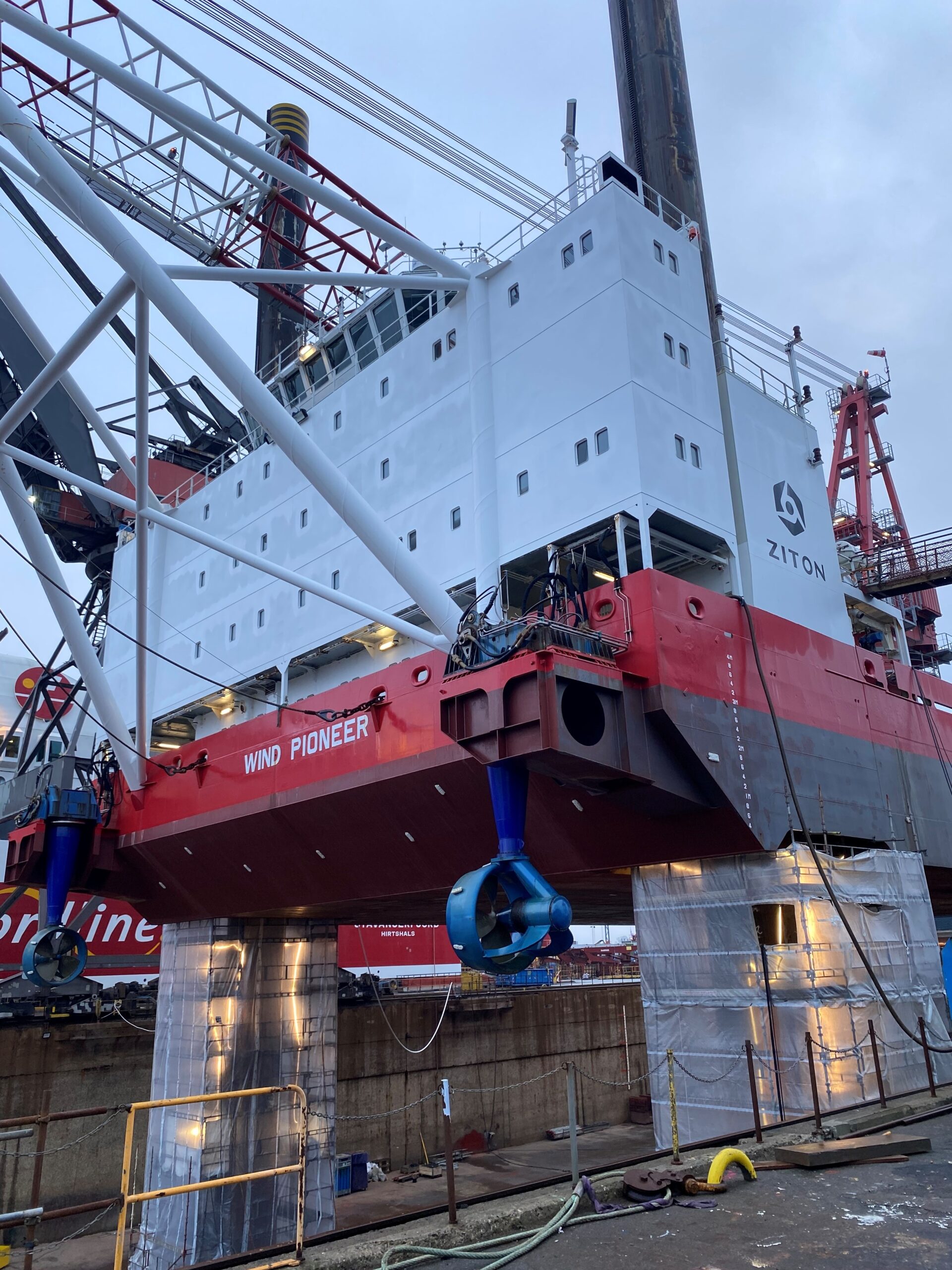
A wastewater retrofit without cutting steel on a ZITON jack-up vessel
For owners and operators of offshore service vessels, wastewater treatment systems are rarely top of mind – until they fail. On board a working vessel, they form part of the background infrastructure that must function, day in and day out, under varying loads and with little tolerance for downtime.
When a critical failure occurred on one of ZITON’s jack-up wind turbine installation vessels, the company faced a familiar but difficult question: retrofit or replace – and at what cost to time and operations? The answer became a modular retrofit solution delivered by G&O Bioreactors, part of the G&O Maritime Group, tailored to the vessel’s existing layout and installed without cutting a hole in the ship.
A working asset, not a new build
The vessel, a jack-up wind turbine support vessel built in 2010, operates across Northern Europe. With cranes capable of handling loads from a few tonnes to several hundred tonnes, the ship plays a key role in offshore wind maintenance and repair.
“On a ship like this, you have to think of it as a small city,” says Mads Bruun Johansen, Technical Superintendent at ZITON. “You need power, water, heat, catering – and of course wastewater treatment. It is a secondary system that we do not pay much attention to. But when it doesn’t work, it becomes very visible.”
The vessel typically sails with a permanent crew of 12–14, supported by catering staff and up to 38 additional personnel during offshore campaigns. Load patterns are uneven, with peak wastewater flows when crews return from work and shower at the same time. Any instability in the system quickly translates into alarms, restrictions – and frustration.
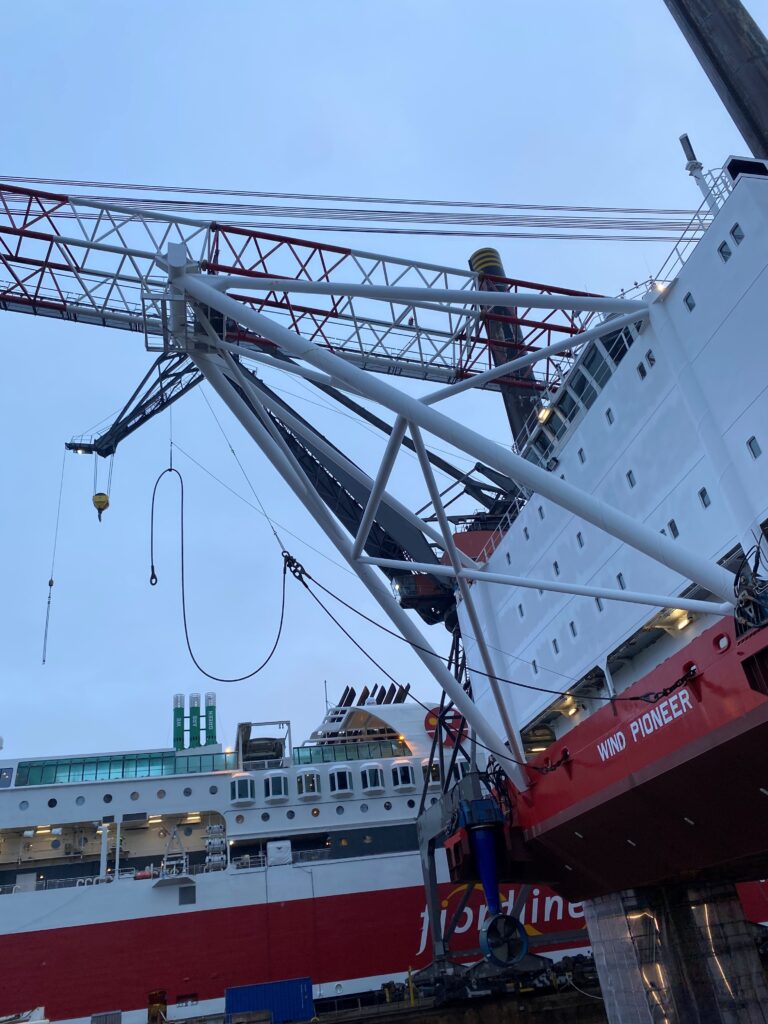
When patching is no longer enough
ZITON had lived with an ageing German wastewater treatment system for several years. Repeated repairs and temporary fixes kept it running, but a failing membrane filter eventually caused major problems.
“We reached a point where we could no longer comply with MARPOL requirements,” Johansen explains. “The original supplier could offer us a completely new system – but only as a full replacement. That would have required cutting a hole in the side of the vessel to get the equipment in. We wanted to avoid that at almost any cost.”
Dock time is expensive, and structural modifications add complexity, risk and schedule pressure. With a planned dock stay already on the calendar, ZITON started looking for alternatives that could be integrated into the existing ship without cutting steel.
Modular thinking from the outset
That search led ZITON to G&O Bioreactors. According to Michael Fønss Møller, flexibility is where modular retrofit solutions make the difference. “Many competing systems come in fixed sizes,” he says. “In retrofit projects, that often means cutting steel. Our approach is different. We design the system in modules and adapt it to the vessel’s design and often limited access restrictions.”
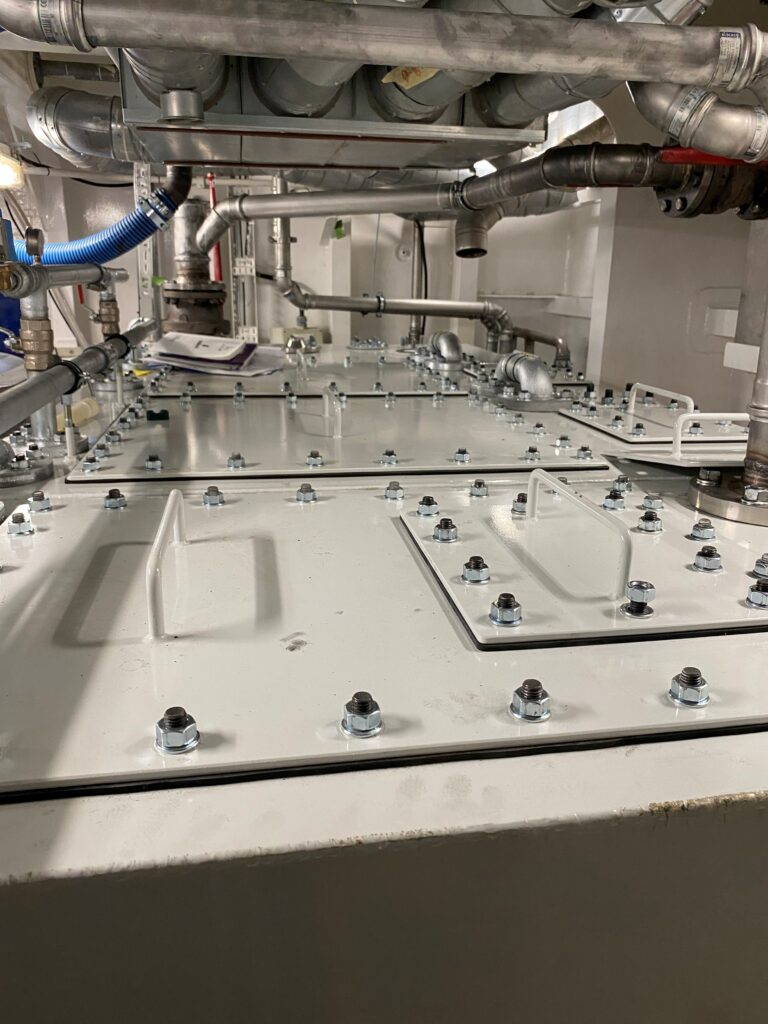
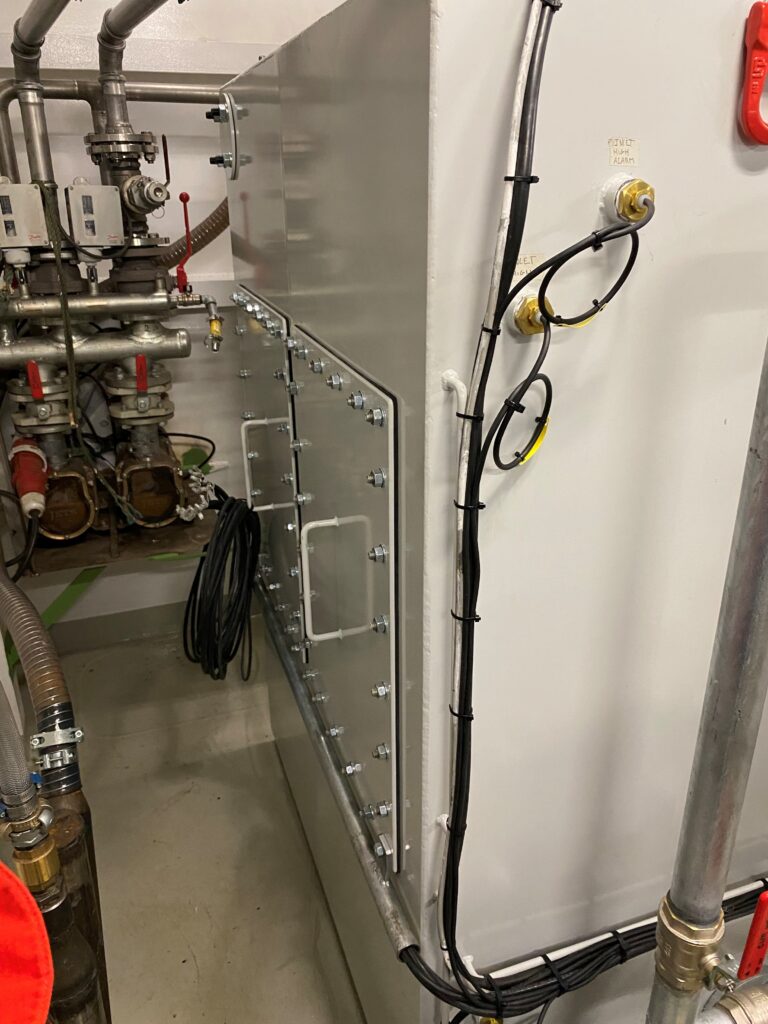
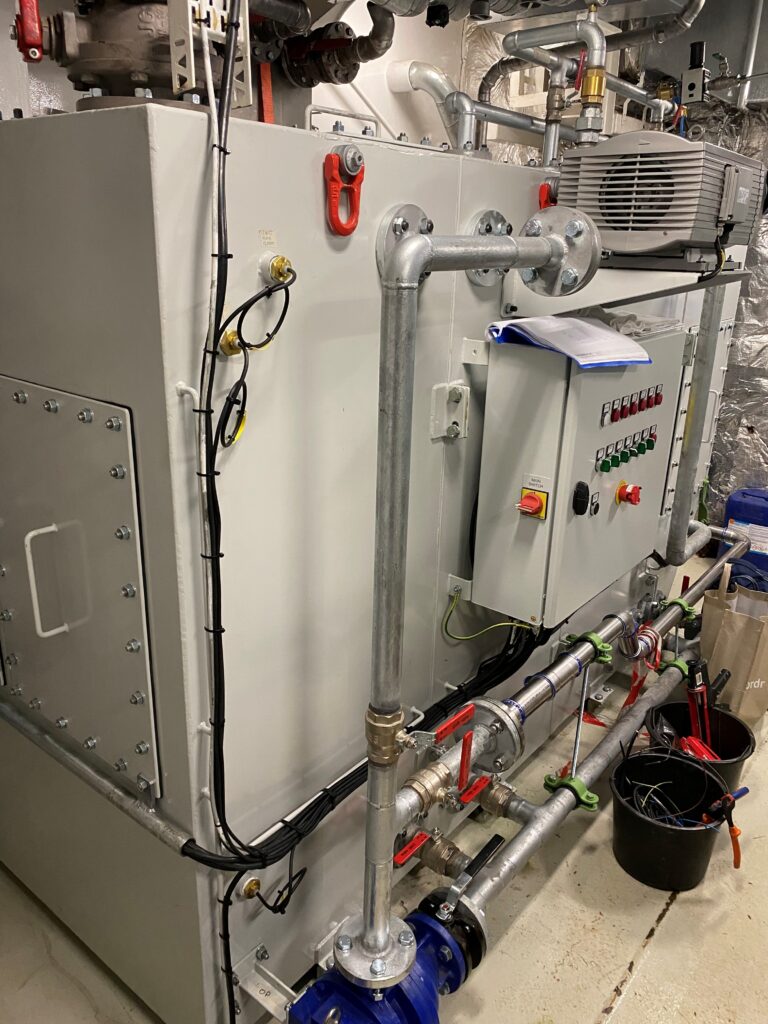
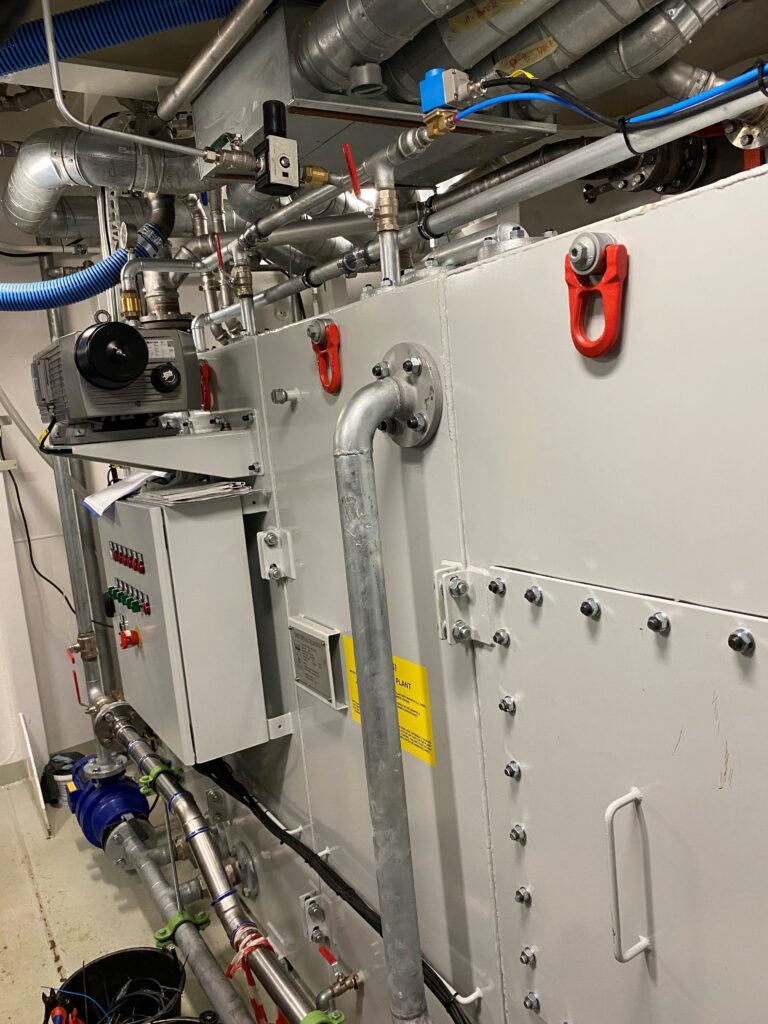
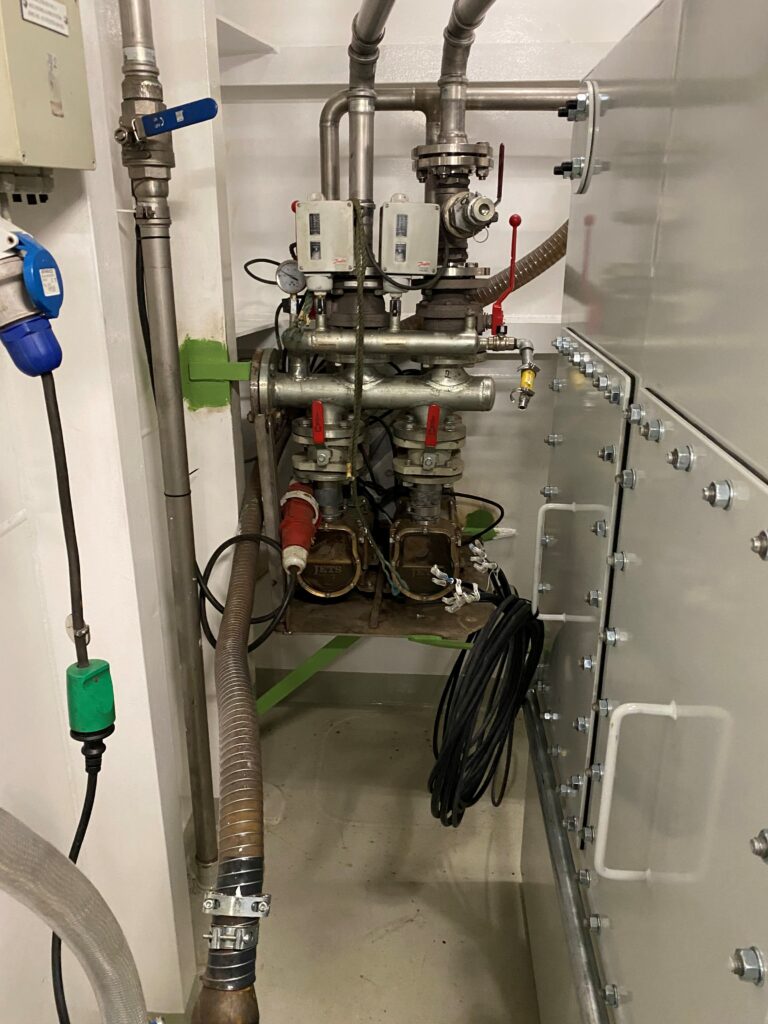
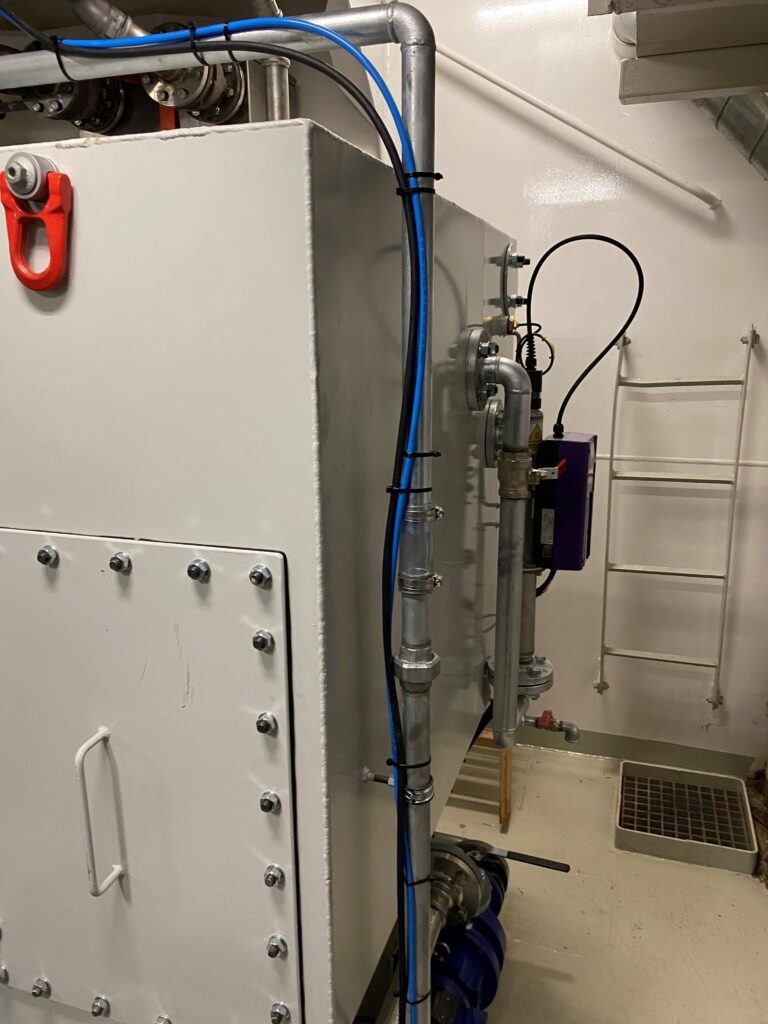
The selected solution is a biological wastewater treatment system with UV disinfection rather than chemical treatment. Black and grey water are collected in an inlet tank, macerated and transferred to a process tank where aeration and bacterial activity supports the organic breakdown. Solids are separated and settled, while the final UV stage neutralises bacterial coliforms before discharge.
“Chemical systems can be more compact, but the downside is the environmental impact. With biological treatment and UV, you avoid chemicals, costly logistic replenishments, hazardous material handling, and still meet IMO requirements,” Michael Fønss Møller says.
Built, tested, and carried in piece by piece
Space and access were the defining parameters. Traditional systems of this capacity are typically three to four metres long, two metres wide and two metres high – far too large to move through existing doors and hatches.
Instead, G&O Bioreactors delivered the plant in four modules, each weighing around 500 kg. The full system was assembled and tested in Vordingborg, Denmark, demonstrated to the customer, then dismantled and transported to the yard.
Before delivery, G&O engineers had already visited the vessel to measure access points, doors and hatches. In some areas, tolerances were down to millimetres. The old system was cut up and removed, and the new modules installed and connected. The entire operation was completed in a few days.
Simpler operation, higher stability
For ZITON, the immediate benefit was restoring compliance – but the longer-term value lies in stability and ease of maintenance. “The new system is much simpler,” Mads Bruun Johansen says. “Replacing a UV lamp takes about an hour. That’s a very different situation from dealing with membrane failures that keep coming back.”
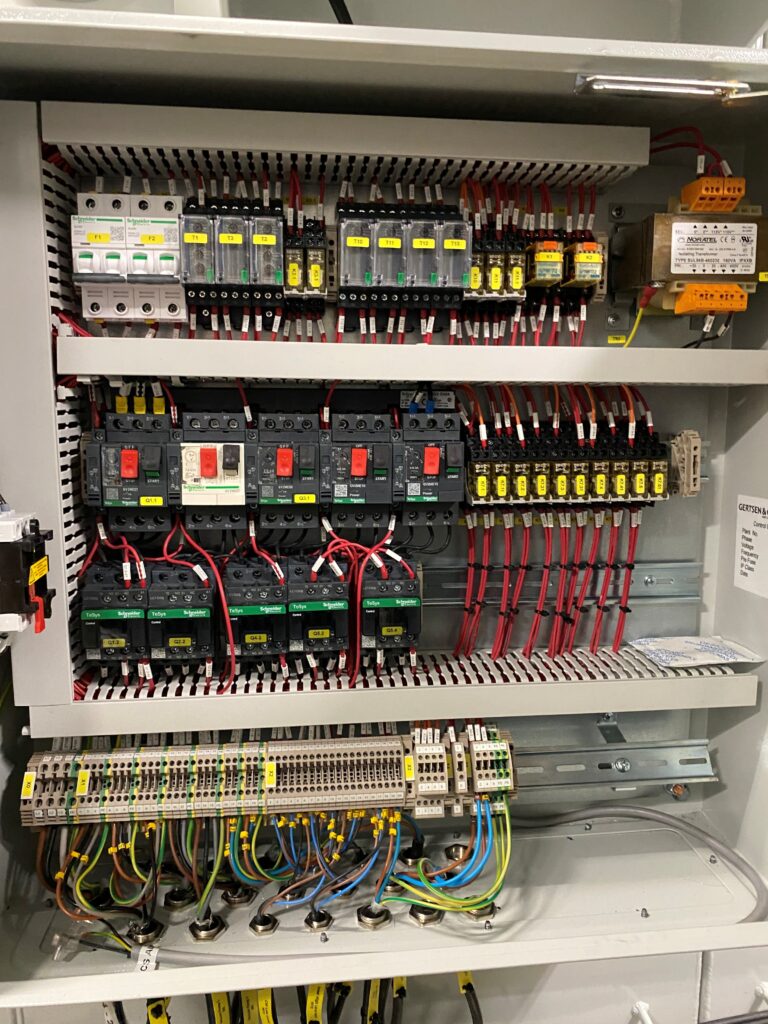
The system has been adapted to ZITON’s existing pumps, allowing long running times and more tolerant alarm settings during peak loads have been set to meet ZITON’s special requirements. “When everyone showers at the same time, you want alarms that make sense. G&O understood that early and adapted the solution to how we operate the vessel.” Since commissioning, the plant has been running at full capacity without faults. “It just runs. That’s what you want from this kind of system,” Mads Bruun Johansen says.
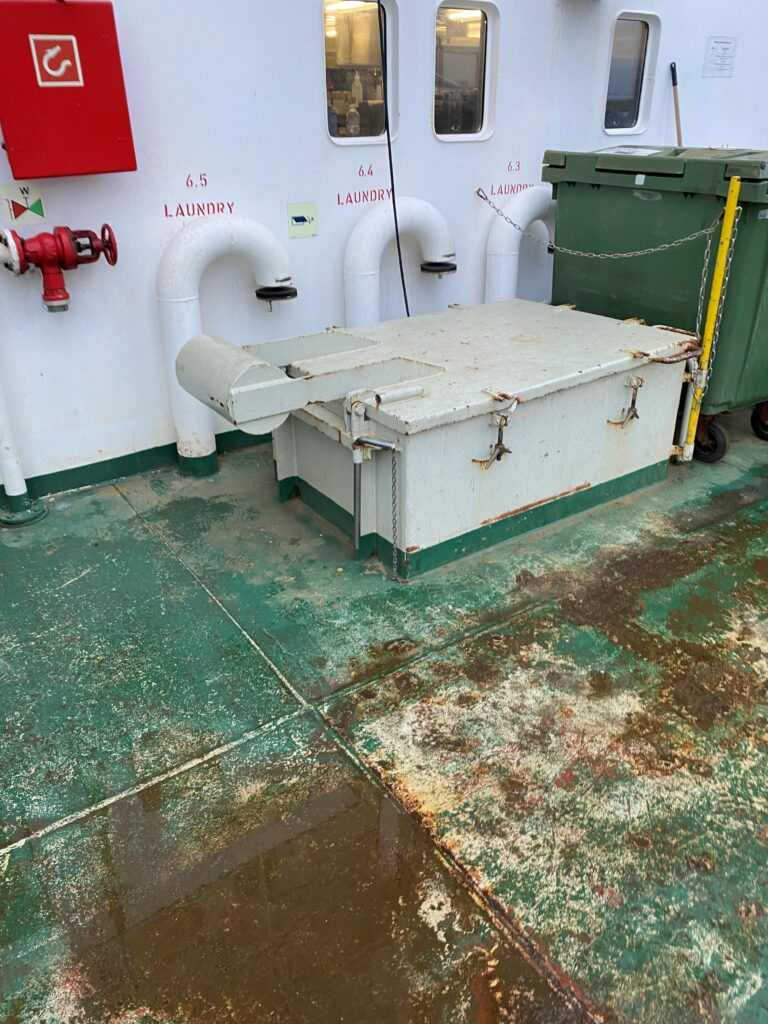
Retrofit as a strategic choice
Wastewater treatment plants are often expected to last for the full lifetime of a vessel. In practice, they rarely do – especially as regulations tighten and operational profiles change. “This type of equipment is often under-prioritised,” Michael Fønss Møller observes. “But IMO requirements are becoming stricter, and that creates demand for high-quality retrofit solutions.”
From the operator’s side, the experience has already influenced future thinking. “I’ve recommended to my colleagues that they look in this direction,” Mads Bruun Johansen says. “For us, avoiding structural modifications saved both time and money. Retrofit makes sense when it’s done properly.”
A reference for ageing offshore assets
As offshore wind vessels and other specialised ships approach 15–20 years of service, owners increasingly face decisions about life extension versus replacement. The ZITON project demonstrates that targeted retrofits can resolve compliance issues, improve reliability and reduce operational risk – without the disruption of major rebuilds.
For G&O Bioreactors, the case underlines the value of modular design, early onboard surveys and close cooperation with the customer. For the operator, the conclusion is more straightforward. “It does what it’s supposed to do,” Johansen says. “And it does it without us having to think about it.”
Contact us
By filling out this form, your request will be shared directly with our experts. We will reply as soon as possible.